
Post Op Knee that Won’t Come Back
Surgery is done. The graft has healed, the swelling is down, the protocol is finished. You did your rehab. The discharge paperwork said you were cleared.
But the knee doesn't feel right. It's weaker than the other side - or worse - it’s still hurts. It doesn't trust the stairs. The cut, the pivot, the run — they all feel further away than they should.
I'll give you a hint. It's not because you ruined it. It's not because the knee can't come back and it doesn’t matter if the timeline said you'd be by now.
“I can safely say my knee works just like it used to.”
-Ashely T.
Why It Hasn’t Come Back
Post-op knee that hasn't come back usually isn't a knee problem anymore. The structural work is done. The graft has healed, the joint is stable, the surgeon's job is finished. What's left is everything around the knee — the hip, the foot, the trunk, and the patterns of movement your body has been running for years.
Here's the part standard rehab usually skips: that altered pattern was already there before the surgery. Whatever happened to the knee — the cutting move that blew the ACL, the awkward landing that tore the meniscus, the slow grind that finally tipped into DJD — was rarely an accident. Even when the trauma was sudden, like a car accident or a fall down the stairs, the body still breaks at its weakest point. And the weakest point is almost always where a movement pattern has been quietly loading the wrong tissue for years. The pattern was the setup; the trauma just found it.
Surgery handles the damaged tissue. The graft, the repair, the cleanup — real and necessary. Standard rehab handles the joint that was operated on. Neither addresses the pattern that damaged the tissue in the first place. If the pattern isn't identified and corrected, the leg can't fully come back, and the joint stays susceptible to whatever finds it next.
This is also why so many patients walk into surgery expecting a specific pain to disappear — and walk out with that exact pain still there. The structural finding on imaging got addressed. The graft was placed, the cleanup was done. But the pattern that was actually driving the pain wasn't part of the operation. The pattern is a separate problem from the tissue, and it needs separate work. Sometimes — when the pattern is corrected first — that work changes the conversation about whether surgery is needed at all.
"For over 20 years I struggled with a bad knee. I always imagined one day needing surgery to repair it. Finally, when the pain would not subside, I came to James for help. After the 1st visit my pain was gone."
-Michael B.
That's why post-op rehab can finish to the letter and the knee still doesn't feel right. Range of motion is back. Strength numbers look fine. The protocol is done. But the underlying pattern that overloaded the knee in the first place is exactly where it was the day before surgery.
Two patients with the same surgery and the same protocol can need different work to come back. For one, every step down the stairs feels uncertain — the leg won't trust the load coming through it. For another, walking is fine, but the cut, the pivot, the lateral move feels wrong — like the rest of the body doesn't know what the knee is doing.
Each is a different system pattern. Each needs a different correction. The standard protocol can't tell them apart, because it isn't asking the question.
The deeper reason most rehab misses this is the same as it is for back pain or any other persistent issue: the diagnostic frameworks that ask these questions aren't part of standard PT training. They're post-graduate specializations that take years of additional study. Most PTs aren't using these tools because they were never trained in them. The discharge timeline is the surface problem. The training gap is the real one.
Why Strengthening and Stretching Haven’t Been Enough
The home exercise sheet. The spin bike. The personal trainer's quad program. The "just easing back into running" that didn't quite take.
None of it is the problem on its own. The problem is that none of it is asking what the rest of your body is doing to compensate.
If your hip isn't pulling its weight, every squat is a knee squat. If your foot is collapsing on landing, every step is a load the knee has to absorb sideways. A trainer's strengthening program — even a careful one — can quietly reinforce the same compensations that brought the knee down in the first place.
Good exercise in the wrong context isn't building you back. It's training the compensations harder.
What changes things is treating the system, not the joint.
"After my knee surgery, the surgeon recommended another therapist who after 5 weeks did not accomplish much. I was extremely worried about the future use of my knee, especially as a very competitive and active tennis player. When the surgeon saw that little progress was being made, he recommended James — and James turned out to be the man for the job."
- Nicholas I.
"He gave significant thought to the specific sports I was eager to return to, as well as the time table I was hoping to follow."
- Janet L.
How I Work
You'll have one hour. One practitioner. The same practitioner, every visit.
The first session is diagnostic, and it asks two questions at once. From the Movement System Impairment framework: which direction has your knee and the chain that supports it become susceptible to, and what daily habits built that susceptibility? From Dynamic Neuromuscular Stabilization: which deep stabilizing patterns — the ones your nervous system was supposed to run automatically — have gone offline?
Most knees that haven’t come back involve both. Treatment is built from what I find.
Manual work where joint or soft-tissue restriction is genuinely limiting motion — a stiff knee or scarred tissue can be a real part of the puzzle. Targeted retraining of the deep stabilizers — hip, trunk, foot — when the system that's supposed to share load with the knee has dropped out. Specific corrections to the chain of motion that's been overloading the joint for months or years.
The exercises you'll practice between sessions are few, deliberate, and tied directly to what your chain needs — not a printed sheet. And the most important work happens in the daily movements you weren't paying attention to: how you stand up from a chair, how you take stairs, how you load the leg every morning. The body learns by repetition. Every movement during the day is part of treatment.
You'll leave each session with a clear physical therapy diagnosis, a small set of things to practice, and a real sense of what's actually going on.
Who I Am
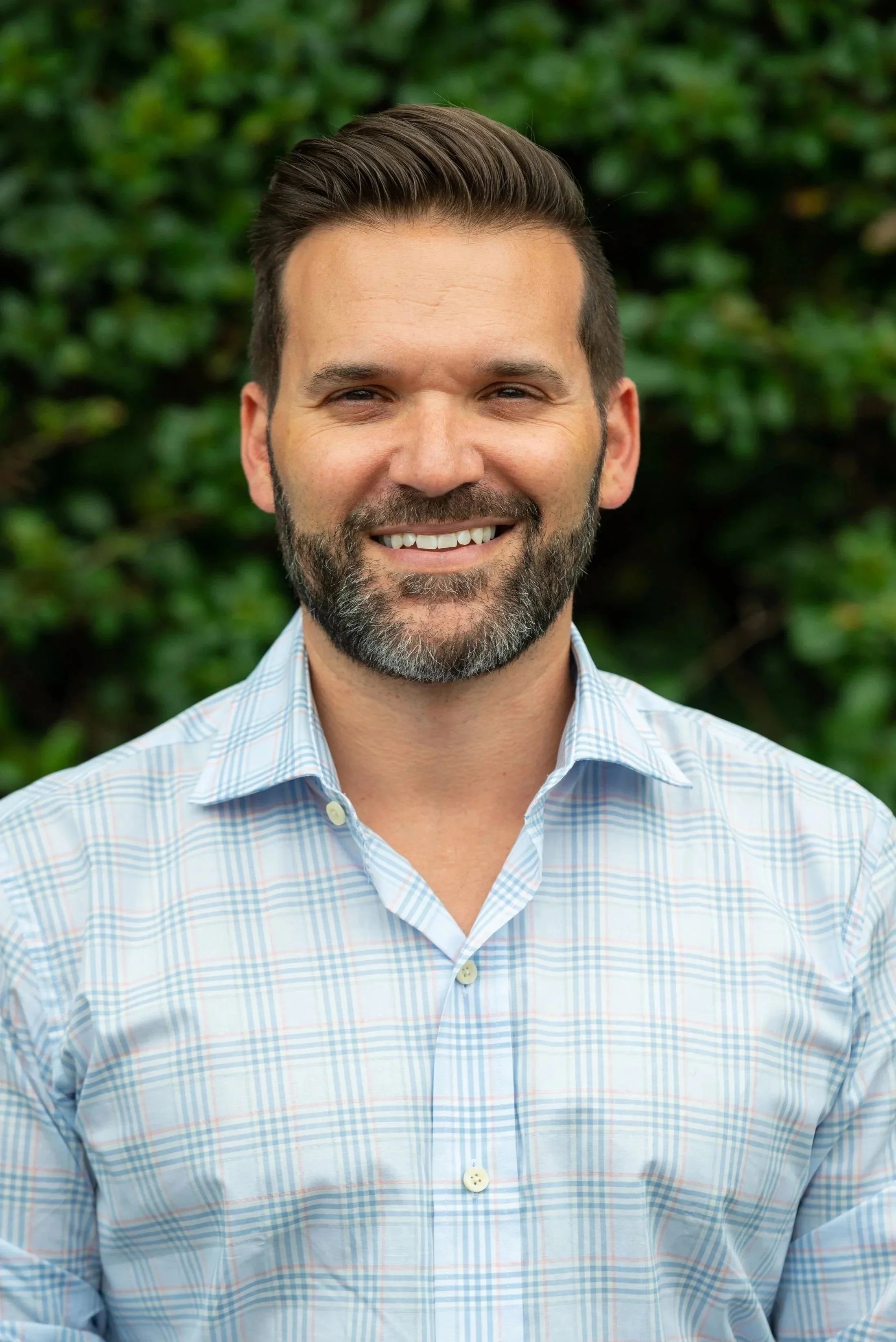
Thirty years of clinical practice. Doctor of Physical Therapy from Pacific University. Bachelor of Science in Physical Therapy from Marquette University.
Advanced training in Dynamic Neuromuscular Stabilization (DNS) — one of 110 DNS-certified practitioners in the United States, and currently the only one practicing in Washington state. Advanced training in the Movement System Impairment (MSI) framework developed by Shirley Sahrmann at Washington University. Received Board Certification in Neurologic Physical Therapy in 2005. Former clinical leadership at Cedars-Sinai Medical Center and Kaiser Permanente.
Voxmota is the work I came to Seattle to do.
Do I need a referral or imaging to come in?
No. Washington allows direct access to physical therapy — you can book without a doctor's referral. If you have recent imaging, bring it; it adds context, but it isn't required. What I'm doing is a movement diagnosis, not an imaging interpretation.
My surgeon already cleared me, but the knee still doesn't feel right. Should I come?
That's one of the most common reasons people walk in. Cleared usually means the structural work is done — the graft has healed, the joint is stable. It doesn't always mean the system around the knee has come back online. There's often a real gap between cleared and confident, and that gap is what we work on.
Answers
How many sessions will I need?
Most plans of care run six to ten visits. We'll know more after the first session, when I've actually seen what's going on. I'd rather give you an honest range than a number designed to commit you.
Book a consultation
A private hour at the Ballard studio, overlooking Puget Sound. Cash-pay. HSA and FSA accepted. No insurance billing.
Or call (206) 486-0467.
I do yoga, Pilates, or work with a trainer. Do I need to stop?
Probably not. But once we've identified the chain of motion holding you back, you'll know which exercises to ease off, which to keep, and which to add. The goal isn't to take away the things you love — it's to make sure they're working with the recovering knee, not against it.